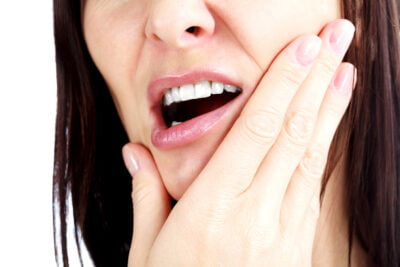
 The tempromandibular joint (TMJ) is a hinge connecting the jaw to the area of your skull that is just in front of the ears. The TMJ is responsible for the jaw’s ability to move up and down and side to side, making it possible for you to talk, chew, and yawn.
TMJ disorders interfere with these abilities, and often cause pain in both the joint and the muscles controlling jaw movement. These disorders are known as temporomandibular disorders, or TMD. However, you may hear them mistakenly called TMJ, after the joint.
TMD Symptoms
The pain caused by TMD may be temporary or long-term, sometimes lasting many years. It’s most common among persons between the ages of 20 and 40, and it affects more women than men.
TMD can affect one or both sides of the face. Symptoms include:
- Pain or tenderness in the jaw area
- Aching pain specifically in and around the ear
- Pain or tension in the neck and shoulder area
- Difficulty or discomfort when chewing or trying to open the mouth wide
- A “popping” sound in the jaw when chewing or opening the mouth
- Swelling in the face
- “Lockjaw”, in which the jaw gets stuck or “locked” in the open or closed position
Additionally, TMD may contribute to toothaches, headaches, dizziness, and ringing in the ears.
TMD Causes
Unfortunately, the direct cause of TMD is often not clear. As with any other joint, orthopedic problems such as inflammation, sore muscles, strained or torn ligaments, and disc problems may contribute to the disorder.
Other causes include:
- Acute injury to the jaw, head or neck
- Grinding or clenching of the teeth
- Arthritis
- High amounts of stress
In some cases, TMD may be related to a serious musculoskeletal disorder known as fibromyalgia.
Treatment
If you believe you’re suffering from TMD, our dentist can conduct a physical exam and use X-rays or other imaging equipment to help diagnose your condition. In some cases, TMD is best treated conservatively at home, including the use of over-the-counter pain relievers, heat or cold packs, and relaxation techniques.
Severe cases of TMD may call for more complex treatment, such as orthodontics or the use of dental restorations (like bridgework). In special cases in which conservative treatments prove ineffective, surgery may be considered – but this is rare and will be avoided whenever possible.
Are you struggling with any of the symptoms listed above? Call the Yuba City Dentistry Group today, and we’ll be happy to help.